
Light, the way
I have crossed Fifth Avenue in midtown Manhattan at roughly 8 am, heading to work, more than a thousand times over the past many years. It is there, every time, every day: the light at the end of the avenue, just south of the traffic, the noise, and the people who pass through that light — pass its’ invitation to visit, to taste it, if only for a moment. It is a glistening mix of eastern sunshine, and cement and glass shadows, slipping their way westward, like clockwork.
We are an item, that light and me. We have come to know each other, to look for each other and welcome each other to the day. Where would I be without that light? It is my lantern. It is my friend.
It is your friend too. Do you see it? Does it see you?
We take light for granted. It is there from daybreak to day’s end, from birth to death. Most people pay no heed to light except for the occasional sunrise or sunset that reminds us of its existence. There is more to light, however, than we can see in those book-end moments …

Light is its own form of music, infinitely variable in its tones and rhythms, capable of surprising us, if we let it. There is Beethoven light, immense in its power, which takes hold of all of our senses, causing us to shield our eyes. It is the sun, itself, in mid-summer, unrelenting in its demanding presence. There is Vivaldi light, subtle and piercing, as it brings a forest alive with lively patterns that will occur only once, because tomorrow leaves will drop and branches will bend, and the tempo of the music will alter, if only slightly. Everything will change, forever.
Children have their own light, which is not hard to see. It follows them around, stubborn and habitual in its presence. Most people would agree that the natural light children give off is a gift from them to us, a reminder of the warmth of innocence that, at times, we secretly wish we still had. It’s more than that. The light children emit is also what keeps us from nearly killing them, when they are at their worst: their bawling, defiant, uncooperative, distant, urchin-like selves.

The light of the child sparks the light of tolerance in the adult. Thank God for the light!
There are people who don’t much care for light. They live in caves, dark huts, shadowy rooms where the window blinds are always drawn. These dark quarters exist within them. They have turned out the light and have chosen to no longer see what is right in front of their eyes. Even the light of day they are forced to walk in has lost its glow. Sunsets are pretty but not moving. Lightning is simply frightening, but not beautiful.
It is hard to love the light of the land, if you don’t love the light inside yourself. The connection between these two forms of light is hard-wired; there is no way to uncouple them. Two people cross a field saturated by a thunderstorm that has just passed. The sky is painted deep, liquid pewter and late-day shards of sun make a modest, fleeting cameo. One person is bowled over by this extraordinary moment, unable to walk on. He has been captured by the light. The other person looks up, then looks down and continues on his way, hoping like hell the rain is done.
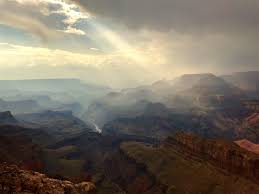
In the case of the first person, the light inside has found the light outside. It was easy; that is the natural order of things. In the other case, the light inside had been turned off and it was, therefore, impossible for him to fully appreciate the light around him. But that doesn’t mean it wasn’t there. The light inside you is always there, waiting to be found.
All may not be lost. Sometimes, remarkable moments of outside light, by night or by day, can get the light to flicker on again, inside. Standing in a river, a friend of mine had been fishing for several hours with little luck. As he packed up, he looked downstream about 200 yards to a steel bridge. The bridge looked as if it were covered with countless white Christmas tree bulbs, but it wasn’t; it was bathed in a thousand tiny, shimmering strands of daylight.
My friend laid his rod down on a rock and gazed at the bridge. His demeanor changed. His mouth softened. His shoulders relaxed. His eyes were locked fast to what could have been a mirage. Our walk back to the car was slow. My friend spoke of things he’d chosen not to speak of for a long time. Some family matters. A few bucket list items. All quite important, many quite personal, some quite urgent.
The play of light on ordinary objects can do that to a person: Make you wake up to what already shines within you.
Everyone has their Fifth Avenue.


Sorry, the comment form is closed at this time.